Harmful code hit 178 big websites through one shared tool
If you visited sites like Zoom, CNN or the BBC on November 16, update your iPhone and watch your card statement. The code has been removed.
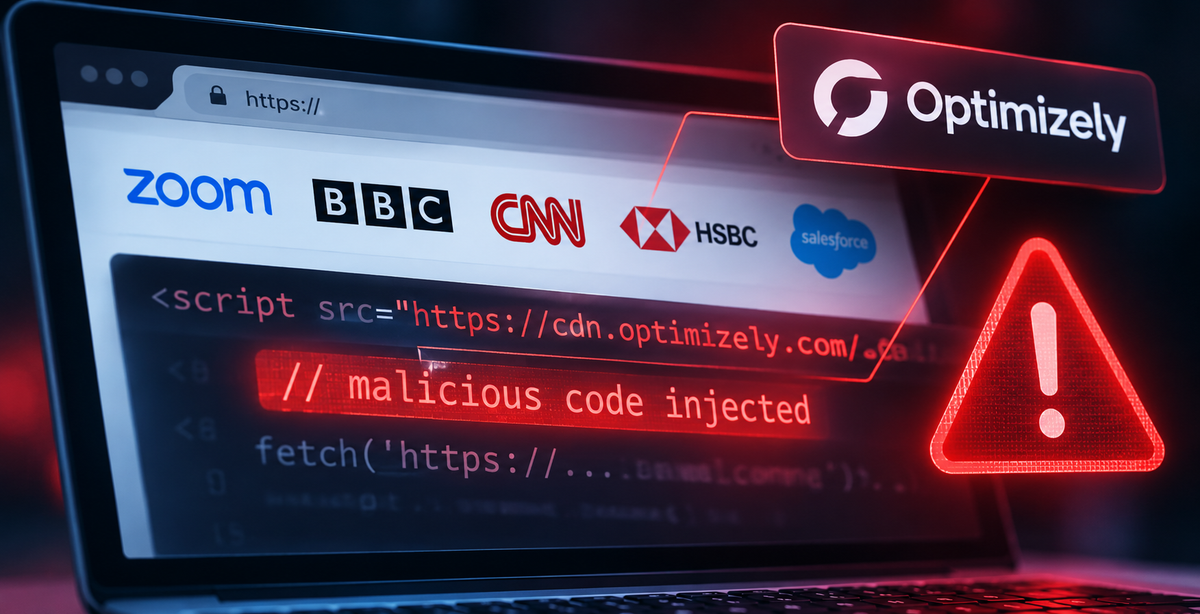
If you used the Zoom, CNN or BBC website on November 16, take two minutes today. Update your iPhone or iPad. Then check your card statement.
Here is what happened. Many big companies use a tool called Optimizely Web. It lets them test small changes on their own websites. Each site loads a short piece of code from Optimizely to do this.
On November 16, someone slipped harmful code into that shared piece. Security researcher Scott Helme of Report URI says it reached visitors of 178 organisations. The list includes Zoom, the BBC, CNN, Salesforce, GitLab, IKEA, HSBC, Equifax, Air France-KLM, Ledger and Peacock.
The code did several bad things at once. It swapped crypto wallet addresses for the attacker's. It grabbed card numbers typed into a site's own forms. It took cookies and screenshots. On iPhones and iPads that were not up to date, it tried to break into the device.
The good news is that the code is gone. Report URI says all infected Optimizely files were cleaned late on November 16. Optimizely has acknowledged the problem on its status page.
What to do now. Update your iPhone or iPad to iOS 18.7.3 or later, or iOS 26.3 or later. If you paid by card on one of these sites that day, watch your statement. If you sent crypto, check that the address matches the one you meant.
For website owners, the lesson is simple. A trusted tool you add to your site can be turned against your visitors, even when your own code is fine.
Open it and check the claim yourself. That is the point.