Google adds two new AI chip systems, making four this year
One keeps sensitive data protected even while AI is using it. The other puts two chips on one package to double its compute and memory bandwidth.
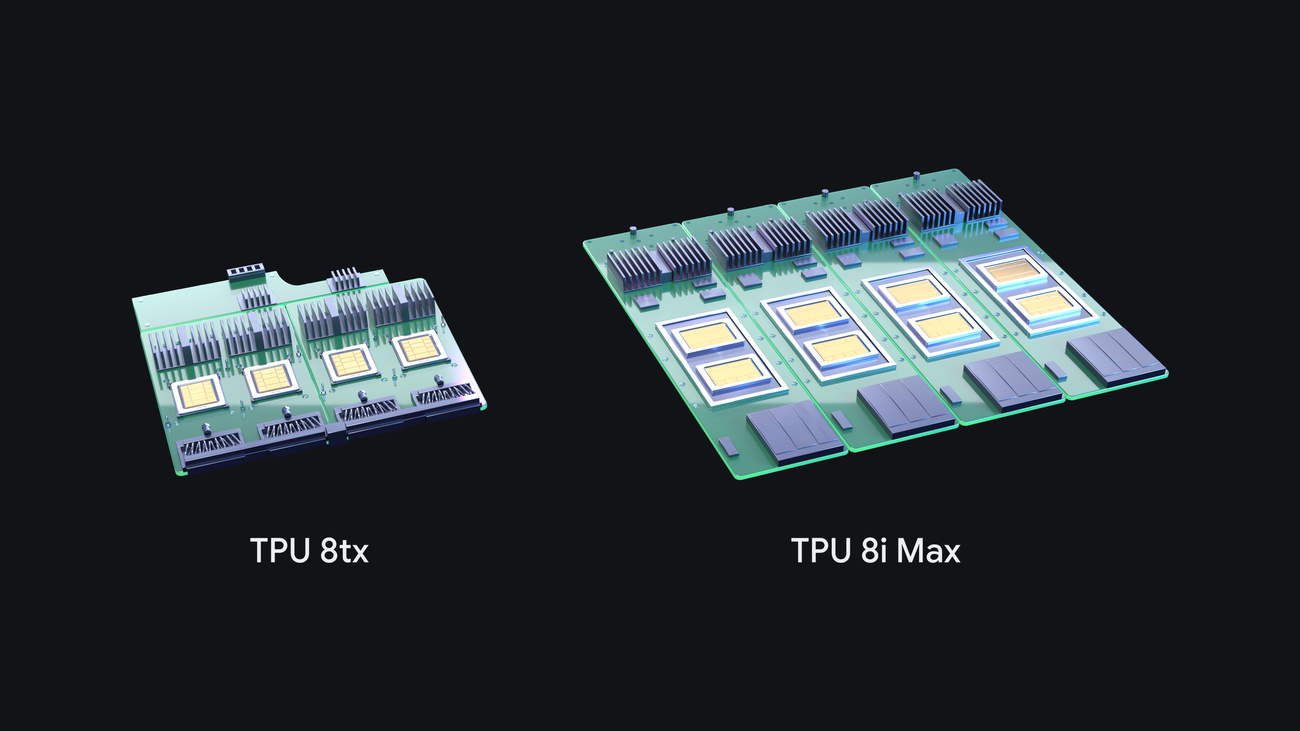
Google announced two new AI chip systems on November 9: TPU 8tx and TPU 8i Max. TPUs are the custom chips Google designs for AI work. That makes four TPU systems in one year, a first for Google.
TPU 8tx is built for security. Data is normally encrypted when it is stored or sent over a network. But it has to be unlocked in memory while a computer works on it. TPU 8tx builds security into the hardware itself, so sensitive data and model weights stay "protected and isolated even while in active use." Google says it is made for regulated companies and governments that run AI agents alongside their most sensitive data. It also gives up to 2x lower latency than TPU 8t, with a near-zero performance penalty. Latency is the wait before a system responds.
TPU 8i Max goes after a memory problem. When dozens of AI agents work across a whole codebase or hours of video at once, memory bandwidth becomes the bottleneck. So Google put two TPU 8i chips on a single package. The result has double the compute, double the SRAM and double the HBM bandwidth of TPU 8i. SRAM and HBM are two kinds of fast memory. Google says this keeps big jobs from stalling.
Google says TPUs now have nearly 100 customers, including leading AI labs, trading firms, retailers and universities. The chips also train and run Google's own Gemini models. Its stated aim is to make TPUs easier to reach for every developer and cloud customer.
Open it and check the claim yourself. That is the point.